
Empowering Small Landlords to Provide Affordable Housing
Offering support, resources, and advocacy for sustainable affordable housing.
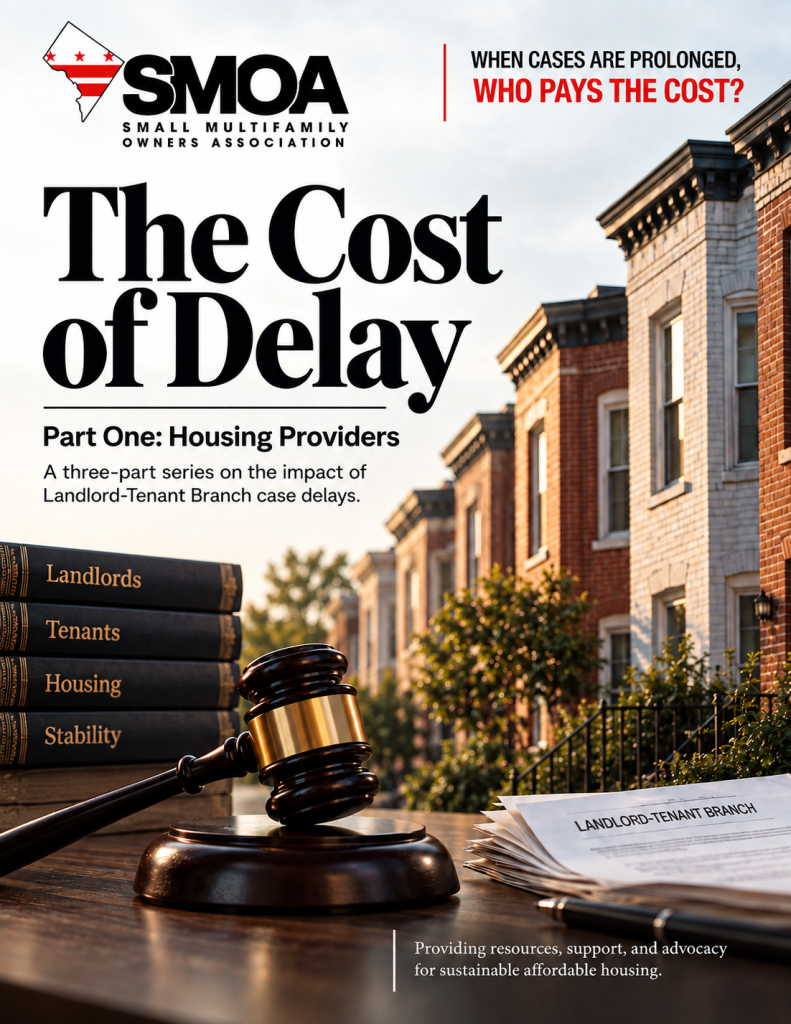
The Cost of Delay
Delay Is Not Neutral
Eviction cases in D.C. are meant to move through a summary judicial process. Instead, they are taking a year, two years, and sometimes longer to reach resolution.
The Cost of Delay is a three-part research series examining what prolonged possession cases mean for the District’s rental housing system.
The stakes are significant. D.C. housing providers have lost more than $1 billion in unpaid rent. Separately, about half of the District’s publicly financed affordable housing portfolio is on a financial distress watch list, representing more than $1 billion in housing assets at risk.
Part One: Housing Providers
Part One draws on a July 2026 survey of more than 600 D.C. housing providers. It documents the financial and operational toll of prolonged possession cases.
• 70% of providers who regained possession said it took at least a year.
• 35% of providers with a current delinquency said their longest-running delinquency had continued for more than two years.
• Nearly 90% said few or none of their delinquent tenants resumed paying rent while their cases were pending.
The damage does not stop at lost rent. 58% reported delaying or canceling maintenance and capital improvements. 68% said their experience had caused them to consider selling rental property.
When cases remain unresolved for years, the effects reach well beyond the courtroom. They show up in deferred repairs, strained operations, lost investment, and a less stable rental housing stock for everyone.
Download Part One: Housing Providers
Coming Next
Part Two will examine the consequences for tenants. Part Three will examine the broader D.C. housing ecosystem.
State of DC Rental Housing 2025
Market Outcomes, Owner Experience, and Structural Implications
This report documents what actually happened to Washington, DC’s rental housing system in 2025 — and what it means for housing policy going forward.
Demand did not collapse. Units did not sit vacant. What broke was income reliability. Prolonged nonpayment and disrupted rent collection destabilized small housing providers while property taxes, insurance, utilities, and compliance costs continued uninterrupted.
Market data shows sales of 5–50 unit buildings rose 45% year over year, per-unit values fell 14–15%, and foreclosures more than doubled. Survey responses from over 750 providers confirm that most experienced periods when rental income failed to cover operating expenses.
Because 86% of providers own ten units or fewer, these losses struck the core of naturally occurring affordable housing.
Affordability was not redeveloped away — it was depleted through owner exhaustion and forced exits.
This report establishes the evidentiary record policymakers can no longer ignore.
Download the full report below
Housing Advocacy
The Small Multifamily & Rental Owners Association (SMOA)
The Small Multifamily & Rental Owners Association (SMOA) is dedicated to empowering small landlords and preserving naturally occurring affordable housing (NOAH) through education, advocacy, and policy research.
The Small Multifamily &Rental Owners Association (SMOA) is dedicated to empowering small landlords and property owners through legal advocacy, financing assistance, and tenant-landlord relations. Our mission is to protect property rights, promote sustainable housing policies, and provide resources that enhance the success of small rental housing providers. We advocate for fair and balanced regulations, facilitate access to financial tools, and support best practices in property management to ensure long-term housing stability and affordability. Additionally, we are committed to the preservation and expansion of Naturally Occurring Affordable Housing (NOAH), recognizing its critical role in maintaining diverse and accessible communities.
Landlord Support
SMOA provides small landlords with essential resources, best practices, and training to manage their properties effectively.
Affordable Housing
We advocate for preserving naturally occurring affordable housing (NOAH) through research, policy engagement, and collaboration with key stakeholders.
Policy Advocacy
SMOA works to ensure fair, sustainable housing policies that protect small landlords and promote stable rental communities.
Our Services
Comprehensive assistance for property management, legal compliance, maintenance, and financial planning.

Advocacy & Education
SMOA provides educational workshops, technical services, financial consulting, and advocates for NOAH policies.
Ready to Get Started?
Take the first step towards sustainable property management solutions with SMOA.
Why Join SMOA?
Expert Guidance
Dedicated experts in property management, legal compliance, and financial planning services.
Community Engagement
Facilitating peer support networks, local policy advocacy, and community events for small landlords.
Join Our Community Today!
Stay informed about our latest workshops, events, and industry updates. Sign up now!